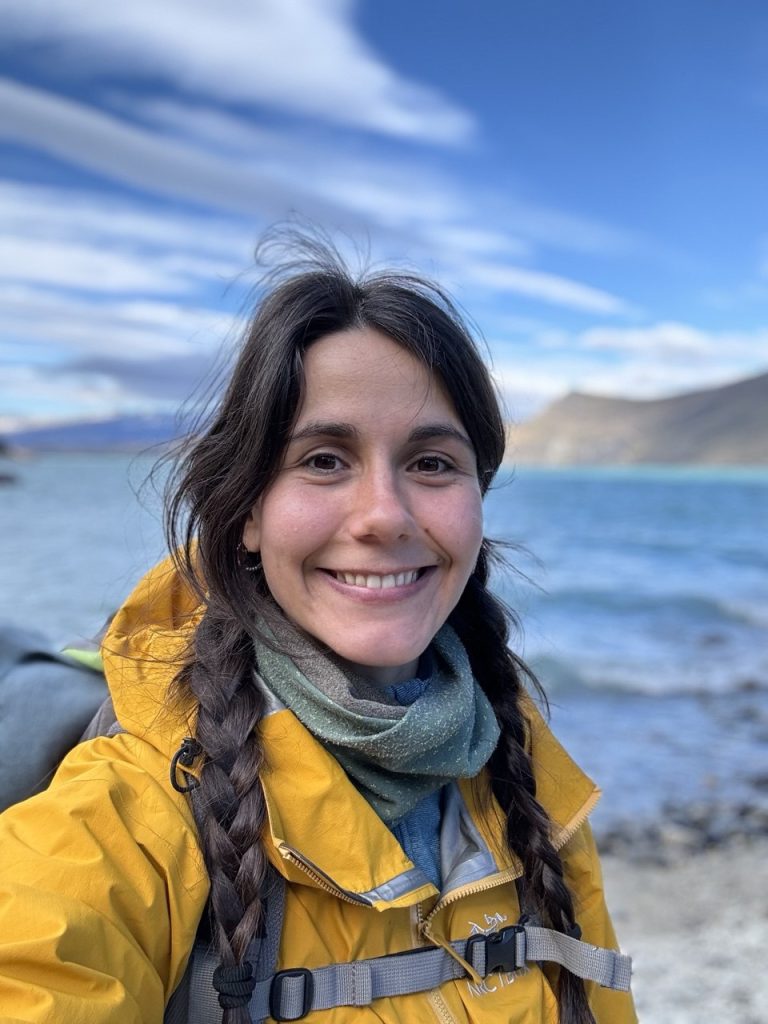
During her PhD thesis, Laura developed a new and innovative method for the rejection of background events that employs CT5, the biggest telescope of the H.E.S.S. array, as a detector for muons. These unstable particles are primarily created in cosmic ray-induced air showers and can therefore be used to “veto” such events, to better be able to measure the more interesting gamma-ray induced showers. This method has greatly enhanced the performance of the H.E.S.S. telescopes above ~10 TeV and has opened up the possibility for the detection of hard-spectrum sources that would otherwise have remained undiscovered. In particular, Laura applied her method to a data set taken on the Galactic microquasar SS433, which not only led to the first detection of TeV gamma rays from this system, but also enabled her to measure the energy-dependent morphology of the emission. This allowed the identification of the site of particle acceleration and was published in the journal Science – a high-impact result for Laura and the H.E.S.S. Collaboration.